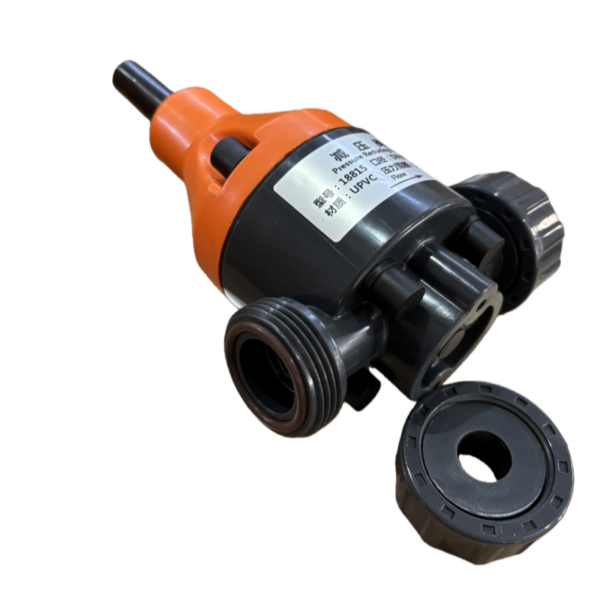
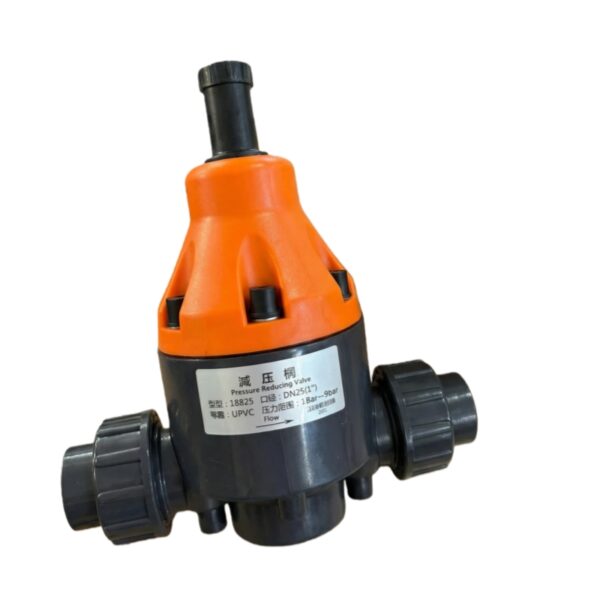
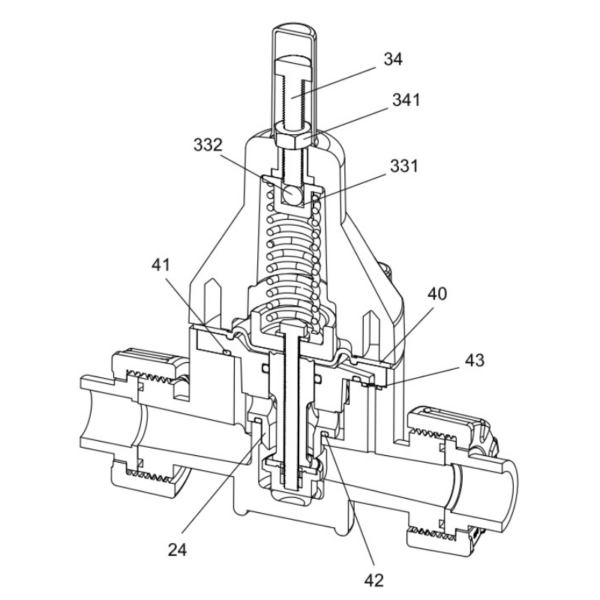
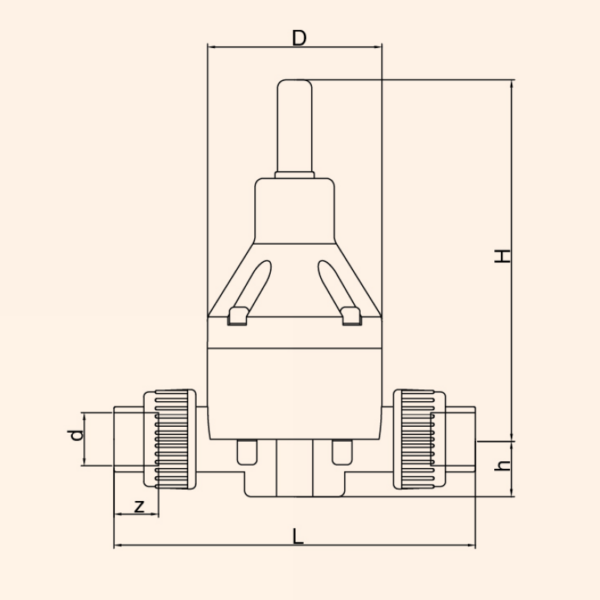
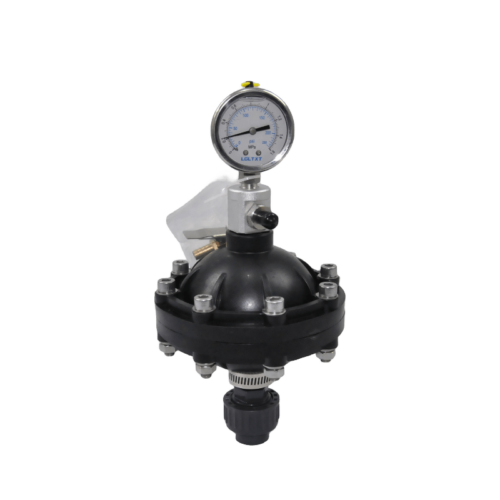
| Pressure reducing valve installation and maintenance instructions |
| Installation and Usage Instructions |
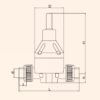
Valve body parameters |
| Install |
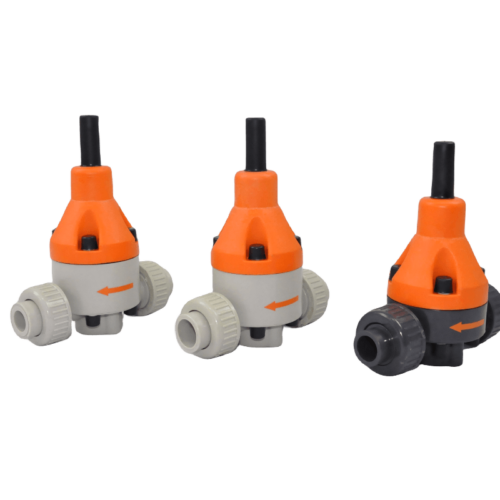
Flow direction should be consistent with the arrow direction on the valve body. |
Body material |
UPVC、CPVC、PP |
| Check valve body pressure |
Use a neutral medium to check the pressure, such as water. |
Diameter |
DN15~DN50 |
| Test pressure < permissible equipment pressure. |
Pressure |
1.0Mpa |
| Test pressure < 1.5PN. |
Diaphragm material |
PTFE+Composite rubber |
| Test pressure < PN + 5 bar to check valve seal. |
Connection method |
Adhesive bonding, Hot melt bonding, Thread, Flange |
| Set pressure |
Factory default value: 1 bar (other default values can be agreed upon with the manufacturer). |
Output pressure |
1~9bar |
| The pressure relief valve must be set according to the environmental conditions that will be used in the future. |
Maintenance and Repair |
| Recommended setup: Install a diaphragm pressure gauge at the front end of the pressure reducing valve. |
Maintenance |
The normal operating condition remains unchanged, and the sealing performance is normal. |
| Step: |
Operating noise and vibration; |
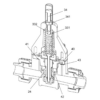
| 1. Remove the protective cover of the adjusting bolt and loosen the bottom locking nut. |
Tighten the housing bolts to the specified torque, and clean the valve with a damp cloth as needed. |
| 2. Rotate the adjusting bolt counterclockwise until you can clearly feel the compression spring completely released. |
Repair |
Protective equipment should be properly installed as required, media should be safely recycled, and hazardous waste should be disposed of in an environmentally friendly manner. |
| 3. Start the equipment and rotate the adjusting bolt clockwise until the desired equipment pressure is reached. |
Remove the valves to ensure the equipment is emptied, depressurized, and cooled. |
| 4. Use a box wrench to hold the adjusting bolt in place while tightening the lock nut, then install the protective cover. |
Ensure the equipment will not restart, then remove the valve from the pipeline. |
| 5. If necessary, the adjusting bolts can be sealed with lead to prevent unauthorized adjustments. |
When it is necessary to disassemble a valve, be aware that there may still be media in the dead corners of the valve. |